
How to use transformation as an opportunity for development? A report by the Reform Institute proposes strategic improvements in change planning.
The climate and energy transition in Poland is accelerating. This brings great opportunities for development but also poses new challenges for public administration. To fully exploit the potential of the changes taking place, Poland needs a more strategic approach to managing the transition.
The climate and energy transition in Poland is accelerating. This brings great opportunities for development but also poses new challenges for public administration. To fully exploit the potential of the changes taking place, Poland needs a more strategic approach to managing the transition.
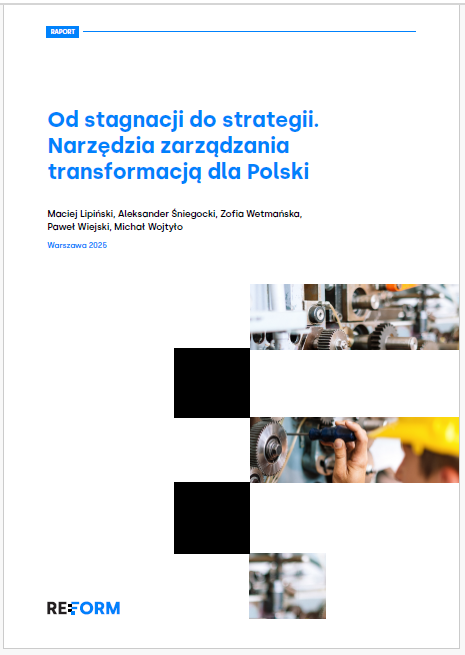
Updating key documents, making better use of available institutional resources and improving inter-ministerial cooperation can significantly increase the effectiveness of the measures taken. Solid foundations already exist – competent institutions, proven procedures and experience in implementing EU programmes. The introduction of gradual, well-planned improvements can significantly increase the effectiveness of transformation management, according to the authors of the latest report by the Reform Institute: From Stagnation to Strategy: Tools for Managing Poland’s Transformation.
Further development of strategy processes shows that a reactive approach to transformation was established in Poland. We all lose out because the delayed strategies, scattered competences, and a lack of stable goals hamper development. We need a coherent management system – from clear decisions in government to standardized monitoring rules – in order to use transformation as a real opportunity to strengthen the economy and improve the quality of life of society, explains Zofia Wetmańska, vice-president of the Reform Institute and one of the authors of the report.
Four pillars for reconstruction
The Reform Institute’s report shows that effective change management requires strengthening four key areas of government action. These will determine whether Poland will be able to use the transformation as an opportunity for development.
Goals and strategies
The Polish economy needs clearly defined goals for emission reduction and energy transition – long-term, intermediate and sectoral – so that they form a coherent compass for the administration, businesses and investors. The report indicates that these precise goals are the foundation of effective strategies, which should describe realistic paths to achieving the desired results.
Until now, successive governments have avoided setting precise national emission reduction targets. They were usually only presented when required by the EU law. This logic must change in Poland – precisely defined targets are essential to ensure predictability and enable businesses and citizens to prepare for the coming changes, comments Paweł Wiejski, co-author of the report.
Institutions and coordination
Although additional resources are necessary to strengthen the institutions managing the transition, they are not sufficient. The Reform Institute recommends establishing a Climate Policy Coordination Committee under the Council of Ministers, which would ensure better flow of information and decisions between ministries.
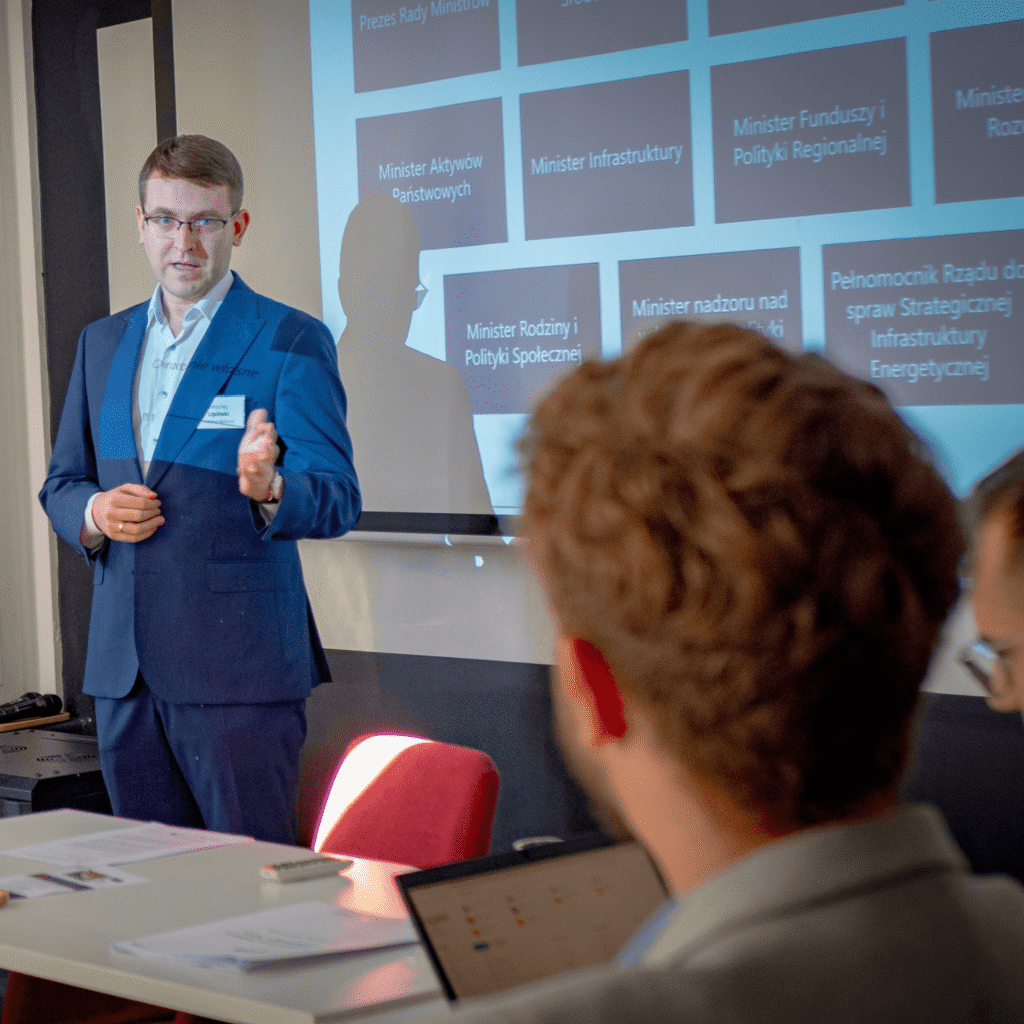
One of the major problems of the Polish administration is its silo mentality. The creation of a Coordination Committee could establish a real decision-making center in the area of energy and climate, which would improve coordination between public institutions key to the transition and allow for better use of their resources and competences, according to Michał Wojtyło, co-author of the report.
However, experts point out that the activities of such a committee should be complemented by an independent scientific council for climate and energy policy, responsible for evaluating the actions of the administration and decision-makers and for providing reliable, evidence-based recommendations.
Monitoring and evaluation
In response to the inconsistent approach to monitoring and evaluating strategies, the report recommends the creation of unified standards that will allow institutions to better analyse progress and make decisions based on reliable data. It is important to ensure the participation of an independent scientific council on climate and energy policy in the monitoring and evaluation processes, which will guarantee the impartiality and reliability of the results. Good examples come from the United Kingdom and France, where independent experts prepare annual reports on the implementation of climate and energy targets, which are also available to the public.
Proper evaluation is the result of good planning, institutional preparation and the selection of appropriate methods. Only regular monitoring based on consistent standards allows us to assess whether the direction of the transition is correct and whether the measures implemented respond to real needs and challenges. In addition, we also propose the development of corrective mechanisms that the administration should use when the pace of achieving the targets is too slow, says Maciej Lipiński, co-author of the report.
Inclusion
Finally, the last key area that analysts at the Reform Institute want to see improved is the inclusion of stakeholders and all interested citizens in the strategy development process. As the study states, it is “not only good for democracy. It also improves the quality of decisions, giving the administration insight into a reality that is difficult to see from the perspective of ministerial offices. Dialogue allows mutual trust to be built and consensus to be reached, even when making bold and difficult decisions”. Ensuring citizen participation allows potential challenges to be identified early on and adequate responses to be prepared, increasing the chances of gaining lasting public support for reforms.
The Reform Institute’s report for each of the above four areas lists key recommendations, indicating the entity responsible for their implementation and the time frame for their implementation. The use of existing procedures and institutions will help to reduce the costs of reforms, both in financial and socio-political terms.
It is a good point for Poland to start making changes. Soon, we should learn about the Ministry of Energy’s new draft National Energy and Climate Plan, while the Ministry of Funds and Regional Policy is working on a Development Strategy for Poland until 2035. Discussions are also underway in the shape of the future EU Multiannual Financial Framework, in which national strategies should play a proactive role – setting priorities and directions for ongoing negotiations.
The report From Stagnation to Strategy: Transformation Management Tools for Poland, available only in Polish, was developed as part of the project “Using the implementation of the REPowerEU plan to better design long-term transformations in Poland’s development policy. Support for institutions implementing reforms and investments, including building awareness among stakeholders in the transformation.” The first part, Strategy or Stagnation? Poland Facing the Challenges of Transformation was published in June 2025. It pointed out the shortcomings of the Polish transformation management system: silo mentality, reactivity, lack of a strategic approach, shortage of analyses and inconsistency of strategies.
More information about the project can be found at: We support institutions in the process of energy and climate transition in line with REPowerEU.












Zapisz się
do newslettera