
How to improve transformation management in Poland?
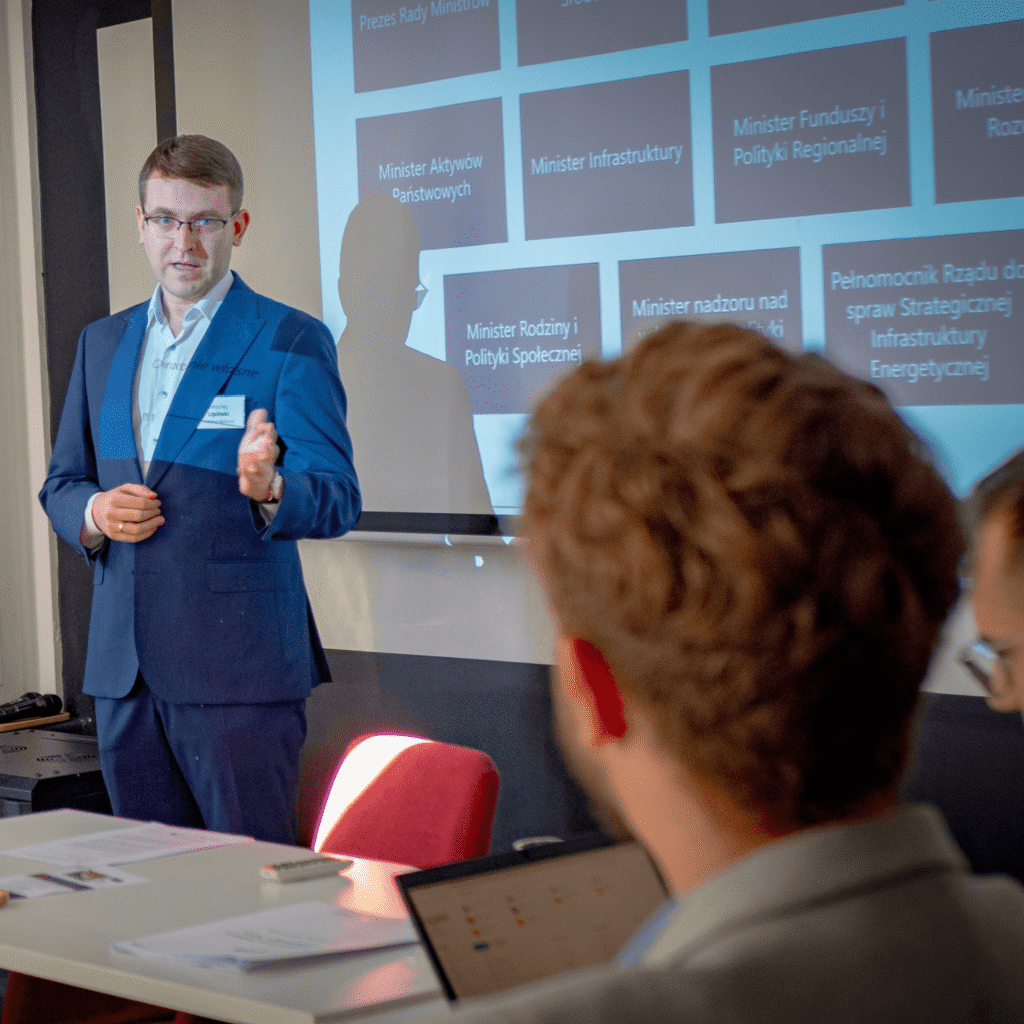
On September 18, the Reform Institute organized an in-person workshop entitled “How to improve the management of transformation in Poland?” It was a continuation of the substantive work carried out after the publication of the June report “Strategy or stagnation? Poland facing the challenges of transformation.” The meeting began with a presentation by the Institute for Reform (attached below), which listed four areas of key state intervention:
- goals and strategies;
- institutions and coordination;
- monitoring and evaluation;
- inclusion and multi-level dialogue.
The debate was attended by representatives of public administration and non-governmental organizations. The diversity of their perspectives shows the need to continue similar meetings. The workshop format of the meeting allowed us to confront our diagnoses and recommendations with the experiences of those involved in the transformation management processes. The discussion will allow us to refine our theses before the autumn publication of a new report on this topic.
Challenges in transformation management
The participants prepared a ranking of key challenges and tools in the transformation management process. Among the challenges, the most frequently mentioned were reactive management, inconsistent strategies, and silo mentality.
Another significant problem is the limited resources of public administration (financial and human), which hinders transformation management. As a result, there is no room for long-term reflection and in-depth internal analysis.
In the opinion of the participants, the clarity of the division of roles within the administration and the prioritization of government actions also need improvement. The problem of the lack of continuity in the work of the administration was emphasized, including the infrequent use of existing strategies and solutions when formulating new initiatives. Another challenge is the blurring of the boundaries between current policy and the creation of high-quality, long-term public policies. It was pointed out that signals of socio-economic problems should be identified by the government much earlier in order to avoid delayed and costly responses to crises.
Insufficiently sustainable support for civil society and the need for more institutionalized dialogue and regular cooperation between the ministry and society were also pointed out. Denmark was given as an example, where the relevant body acts as a liaison enabling closer cooperation between representatives of both groups. However, it was noted that differences in the national contexts of the countries cited as sources of good practice must be taken into account (in the case of Denmark, these include a significant difference in population size and a different structure of government administration at the ministerial level). Problems with the effective and transparent use of funds for transition management (e.g., from the EU ETS system) were also pointed out, which will become more important in the next, more flexible EU budget.
One of the frequently encountered problems was identified as the inappropriate definition of challenges when designing policies, which limits the effectiveness of the solutions created. For example, drought is not a problem, but the result of years of neglect and external factors that must be systematically addressed. Paying compensation to farmers is appropriate in this situation, but it does not solve the problem of drought.
The workshop also featured a dissenting voice regarding references to Scandinavian examples of public policy management. The limited usefulness of such comparisons was emphasized due to the smaller population, the long-established practice of more participatory governance, and the smaller size of the public administration, in which agencies play a role similar to that performed in Poland by the analytical units of ministries.
Recommendations related to transformation management
The participants in the discussion identified the following as the most important tools:
- consistency of planning in the short and long term;
- the creation of long-term and sectoral goals;
- the need for expert input in the policy-making process.
Among the solutions, the need for a strong coordination center in the Chancellery of the Prime Minister and a clear division of roles between individual ministries and institutions was emphasized. An appeal was made to attempt to reach a political and social consensus on the general directions of the country’s development. Increasing consistency and continuity in policy-making would strengthen public trust in public administration.
Previous attempts to create an analytical base in one of the ministries were discussed. Doubts were expressed about the feasibility of establishing a central government analytical center. As an alternative, better coordinated cooperation between existing institutions was proposed, which should focus on key challenges for Poland’s development. It was emphasized that regular cooperation is needed not only between analytical institutions, but also between ministries and institutions. It is also important to provide institutions supporting the transformation with adequate human resources to better identify data gaps and systematize existing knowledge and experience.
Technical recommendations:
- greater operationalization of comments made in public consultations by stakeholders (including non-governmental organizations) and translating them into measurable indicators for the strategies being developed;
- basing proposals on reliable and clearly marked data;
- creation of a verified and institutionalized database of stakeholder publications that could be used by officials when designing strategies;
- ensuring the continuity of analyses and a transparent, publicly available system for collecting and presenting data for strategy development and monitoring, as well as rapid response to external changes;
- developing a uniform methodology for data collection, specifying the level of aggregation and institutional responsibility.
At the end of the meeting, it was emphasized that long-term strategies should be based on general indicators and objectives, rather than on specific technological projects, which may be delayed or become outdated. This approach will ensure greater flexibility, keep the strategy up to date, and address Poland’s responsiveness to EU institutions. Specific solutions, intermediate goals, and a list of actions for the coming years should develop and refine horizontal development strategies.
The event was carried out as part of a project financed by the National Recovery and Resilience Plan (KPO).
More information about the project can be found at: We support institutions in the process of energy and climate transformation in line with REPowerEU.


Zapisz się
do newslettera