
From stagnation to strategy. Transformation management tools for Poland – summary of the Reform Institute meeting
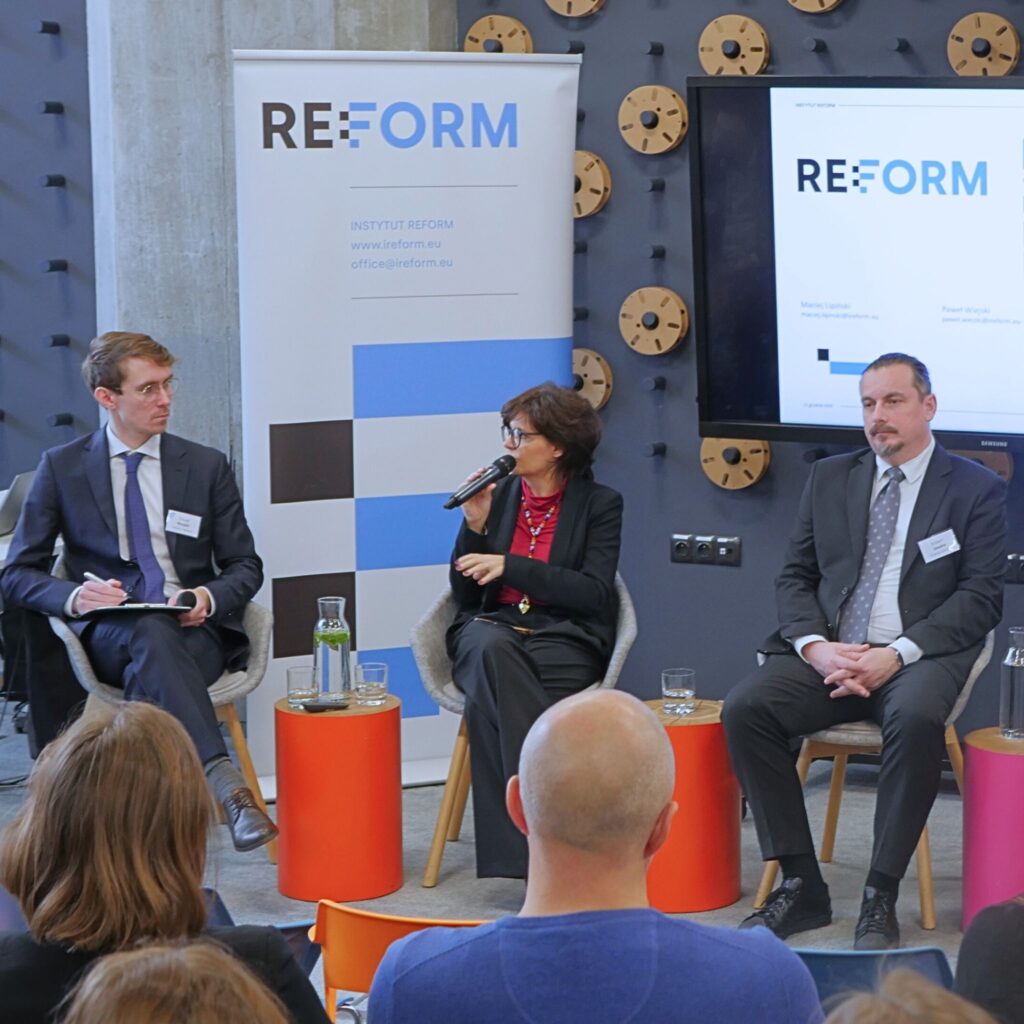
On December 11, 2025, Reform Institute released its report titled “From Stagnation to Strategy: Tools for Managing the Transition in Poland,” which served as the starting point for a discussion on specific recommendations to improve the management of the climate and energy transition in Poland. The event took place at the Central House of Technology in Warsaw and brought together several dozen people, including representatives of public administration, public institutions, non-governmental organizations, and the private sector.
The meeting opened with a presentation by analysts from the Reform Institute—Maciej Lipiński, Paweł Wiejski, and Michał Wojtyło. This was followed by a discussion focused on four main areas where changes would improve the functioning of public administration:
- goals and strategies,
- institutions and coordination,
- monitoring and evaluation,
- stakeholder and citizen engagement.
Following the presentation of the main findings from the Institute for Reforms’ report, a moderated expert panel took place. Participants included:
- Justyna Glusman, Deputy Mayor of the Ochota District,
- Robert Jeszke, Deputy Director for Emissions Management at the Institute of Environmental Protection – National Research Institute,
- Michał Hetmański, President of the Instrat Foundation,
- Daniel Kiewra, Chief Climate and Energy Expert at the Responsible Business Forum
During the meeting, the need to establish a clear leadership centre to coordinate the transformation at the government level was repeatedly emphasized. Such a leader should have a strong political mandate and clearly defined responsibility for the entire transformation process. Participants noted that a lack of decision-making authority and an unclear division of responsibilities are among the main barriers to effective management of the transition.
Another key theme was the role of goals and an overarching climate and energy strategy. Such a strategy should set the direction for lower-level documents and provide a long-term vision. Currently, however, these elements are lacking. Meanwhile, without strategic thinking and clear goals, implementing lasting changes will be very difficult.
The necessity of basing decisions regarding the transformation on reliable data and knowledge was also emphasized. In this context, the need to better utilize the potential of existing analytical institutions and to further strengthen them was highlighted. Attention was drawn to the urgent need to develop systems for monitoring and evaluating public policies.
The discussion showed that what matters is not only the content of public policies but also an appropriate narrative surrounding the transition. Framing it within a broader context—as an element of security or development policy—can facilitate and accelerate the implementation of key actions by the decision-makers involved.
Due to the high level of interest and the need to explore the topic in depth, the Institute for Reforms organized two additional online meetings, during which the main conclusions of the report were discussed by a group including government officials and non-governmental organizations. One of the webinars is available on YouTube.






Zapisz się
do newslettera