
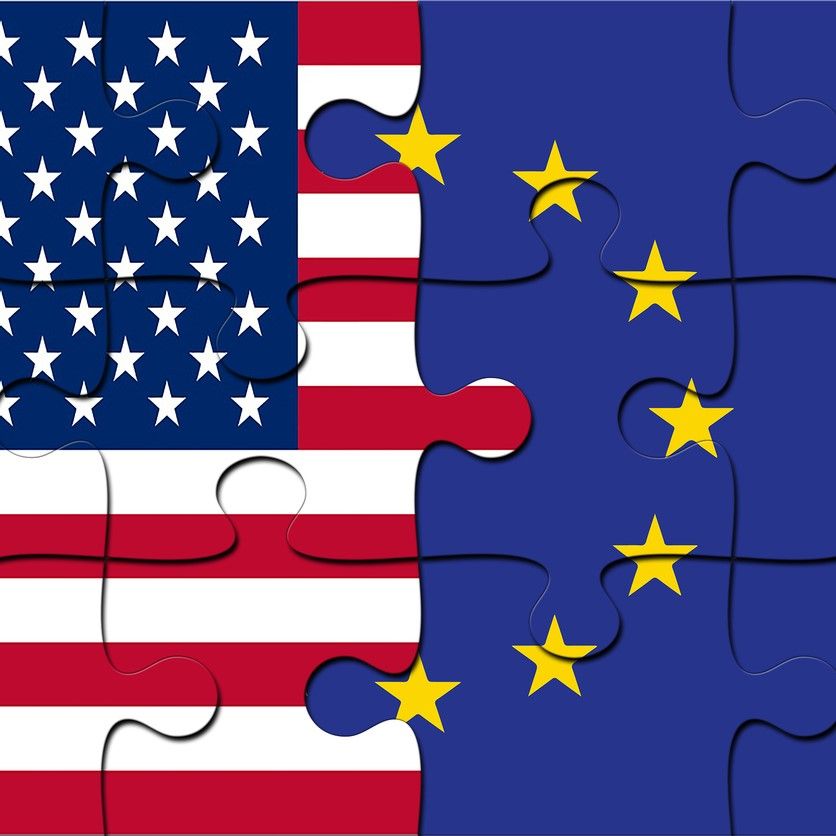
The transition towards climate neutrality is increasingly shaped not only by domestic climate policies, but also by international cooperation on industrial decarbonisation, clean technologies, and energy transition pathways. As both the European Union and the United States accelerate investments in clean industry and low-emission technologies, stronger transatlantic coordination is becoming increasingly important for ensuring effective and globally interoperable climate action.
In response to these challenges, the project “Race to the Top for Climate” supported the development of cooperative approaches to EU-US industrial decarbonisation policies. The project aimed to provide actionable knowledge on industrial decarbonisation policy, identify opportunities for transatlantic cooperation, and help establish the foundations for longer-term EU-US stakeholder dialogue on clean industrial transition.
The Reform Institute assessed current and emerging industrial decarbonisation policies on both sides of the Atlantic, assessing their implications for trade, investment, standards, and clean technology deployment. The team examines areas such as carbon pricing, industrial subsidies, clean technology support schemes, hydrogen, CCS, and carbon standards. The project combines analytical work led by the Reform Institute with stakeholder engagement delivered by Climate Strategies through a co-creative research process involving policymakers, experts, industry representatives, and civil society organisations.
The project delivers policy analyses, recommendations, and stakeholder-oriented publications focused on strengthening EU-US cooperation on industrial decarbonisation. Its outputs identify practical pathways for improving transatlantic alignment while avoiding fragmentation and zero-sum competition in clean industry development. The project also contributes to building a longer-term platform for dialogue on globally interoperable climate and industrial policies.
The Reform Institute led the project and delivered analytical work related to industrial decarbonisation, transatlantic climate cooperation, and clean economy transition pathways. Our experts were responsible for developing policy analyses and recommendations focused on the interoperability of EU and US climate and industrial policies, with particular attention to hard-to-abate sectors and clean industry governance.
The project contributes to strengthening international cooperation on industrial decarbonisation by identifying policy approaches that can accelerate climate action while supporting economic resilience and industrial transformation. Its findings help policymakers better understand the opportunities and risks associated with transatlantic climate cooperation and support the development of more coordinated clean industry strategies.
The project was implemented in cooperation with Climate Strategies, with funding and support from Environmental Defense Fund (EDF).











Zapisz się
do newslettera